Technical Articles
Explore our curated collection of in-depth engineering analyses, metallurgical studies, and advanced welding methodologies.
Design for Manufacture/Inspection
Design for manufacture and inspection (DFM/DFI) is not just a concept for machined parts; it directly applies to welded fabrications. Integrating weld
AWS D1.1 2026 Changes Overview
The 2026 edition of AWS D1.1 introduces several structural changes that directly impact fabrication shops: prequalified WPS limits for fillet welds ha
Welding criteria for supercritical CO2 lines in CCUS plants
Supercritical CO2 (sCO2) pipelines in CCUS plants operate above 31°C and 73.8 bar, where CO2 behaves as a dense fluid with low viscosity and high diff
Digital twin simulation for WAAM steel node fabrication
A recent case study on a DED-Arc steel node for construction demonstrates how digital twin simulation can predict distortion and residual stress in wi
Duplex Stainless Steel Shielding Gas Nitrogen Control
In heavy fabrication of duplex stainless steels like 2205 and 2507, nitrogen content in the shielding gas is a critical control parameter. Too little
Welding Distortion Simulation for Heavy Plate Fabrication
Welding distortion in heavy plate fabrication is not a random occurrence; it follows predictable thermomechanical patterns driven by heat input, restr
Green Steel: Structural Steel Market & Weldability
The Europe structural steel market is shifting as green steel from DRI-EAF routes enters fabrication yards. Recent EUROFER data shows DRI-EAF melts co
Hydrotest Planning for Piping Spools
A hydrotest that fails due to trapped air or an unvented pocket wastes a full shift and risks damaging the test package. Proper vent placement and hol

High-strength low-alloy (HSLA) steels are widely used in structural and...
High-strength low-alloy (HSLA) steels are widely used in structural and pressure vessel fabrication for their excellent strength-to-weight ratio. Howe
Spool Splitting Strategy to Minimize Field Fit-Up Welds
Spool splitting is a critical front-end engineering decision that directly impacts field weld count, fit-up quality, and overall project cost. A well-
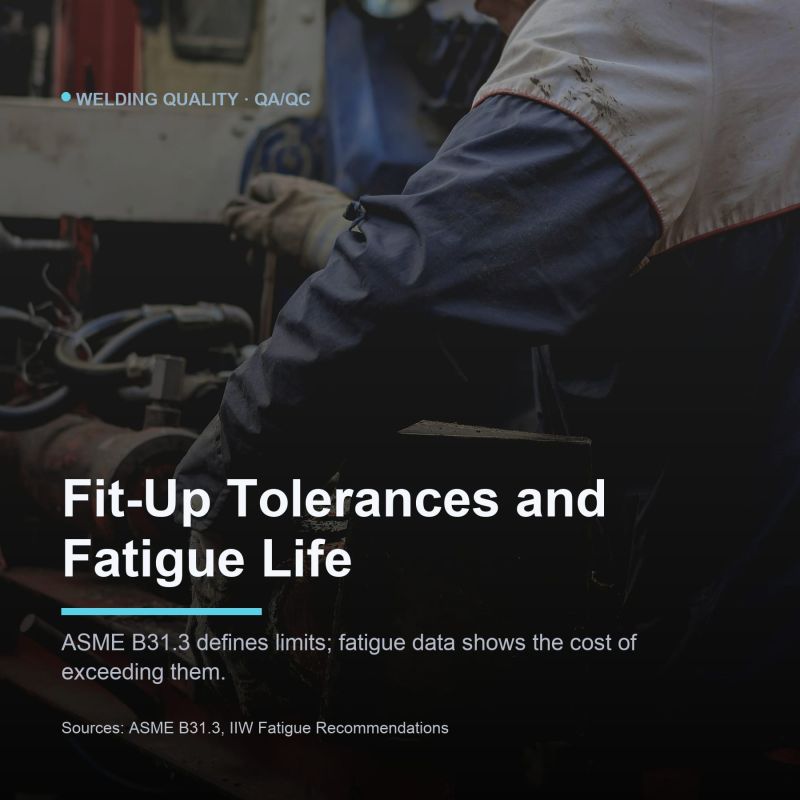
Pipe fit-up tolerances directly influence the fatigue life of welded piping...
Per ASME B31.3 Paragraph 328.4.2, the maximum allowable mismatch at girth welds is 1.5 mm for wall thickness up to 12 mm, and 3 mm for thicker walls.
Liquid metal embrittlement (LME) is a well-documented failure mechanism in...
Cracking typically manifests as intergranular surface cracks in the HAZ, often within millimeters of the weld toe. TWI Job Knowledge papers note that
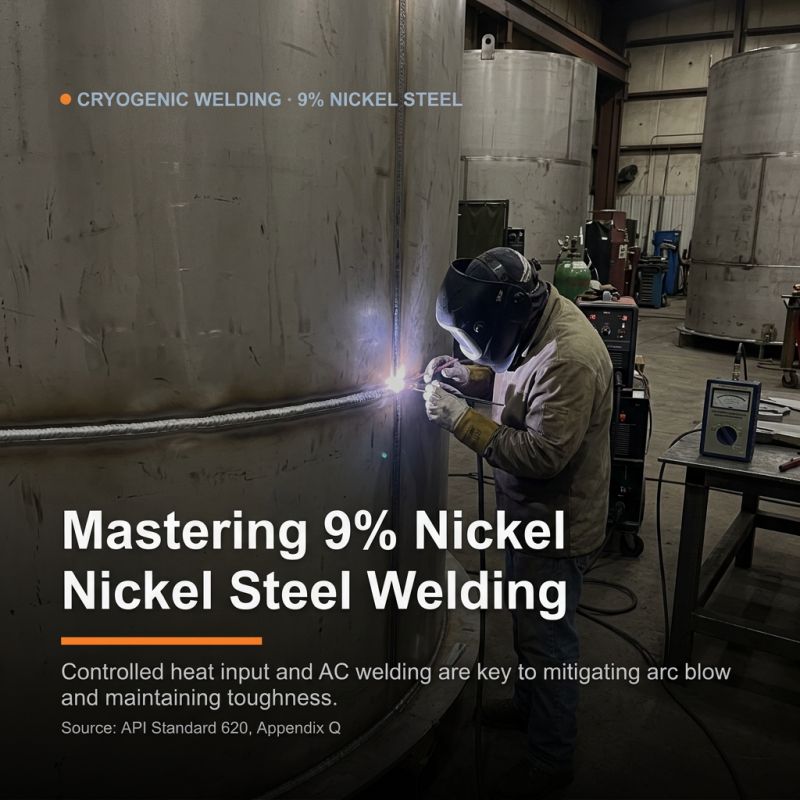
Cryogenic storage tanks for LNG and other liquefied gases demand materials...
Per API Standard 620, Appendix Q, the welding of 9% nickel steel requires strict control of heat input and interpass temperature to maintain impact pr
Sensitization in Austenitic Stainless Steels: Strauss and Huey Tests
Sensitization is a critical degradation mechanism in austenitic stainless steels, occurring when chromium carbides precipitate at grain boundaries dur
Titanium welding demands rigorous atmospheric protection to prevent...
A trailing shield is essential for maintaining inert gas coverage over the solidifying weld and heat-affected zone until the temperature drops below 3
PAUT Calibration for Pipe Girth Welds
Phased array ultrasonic testing (PAUT) is a powerful tool for girth weld inspection, but calibration is where most errors originate.
Carbon migration is a well-known metallurgical phenomenon in dissimilar...
Carbon migration is a well-known metallurgical phenomenon in dissimilar metal welds between carbon steel and austenitic stainless steel. During elevat
Time-of-flight diffraction (TOFD) is a powerful ultrasonic technique for...
For a 25 mm thick girth weld, typical TOFD setup uses 5 MHz probes with 60? wedges, spaced to produce a 20 mm PCS (probe centre separation). Scan sens
Welding 9% nickel steel for LNG storage tanks demands strict control over...
Welding 9% nickel steel for LNG storage tanks demands strict control over heat input and interpass temperature. The material retains excellent toughne
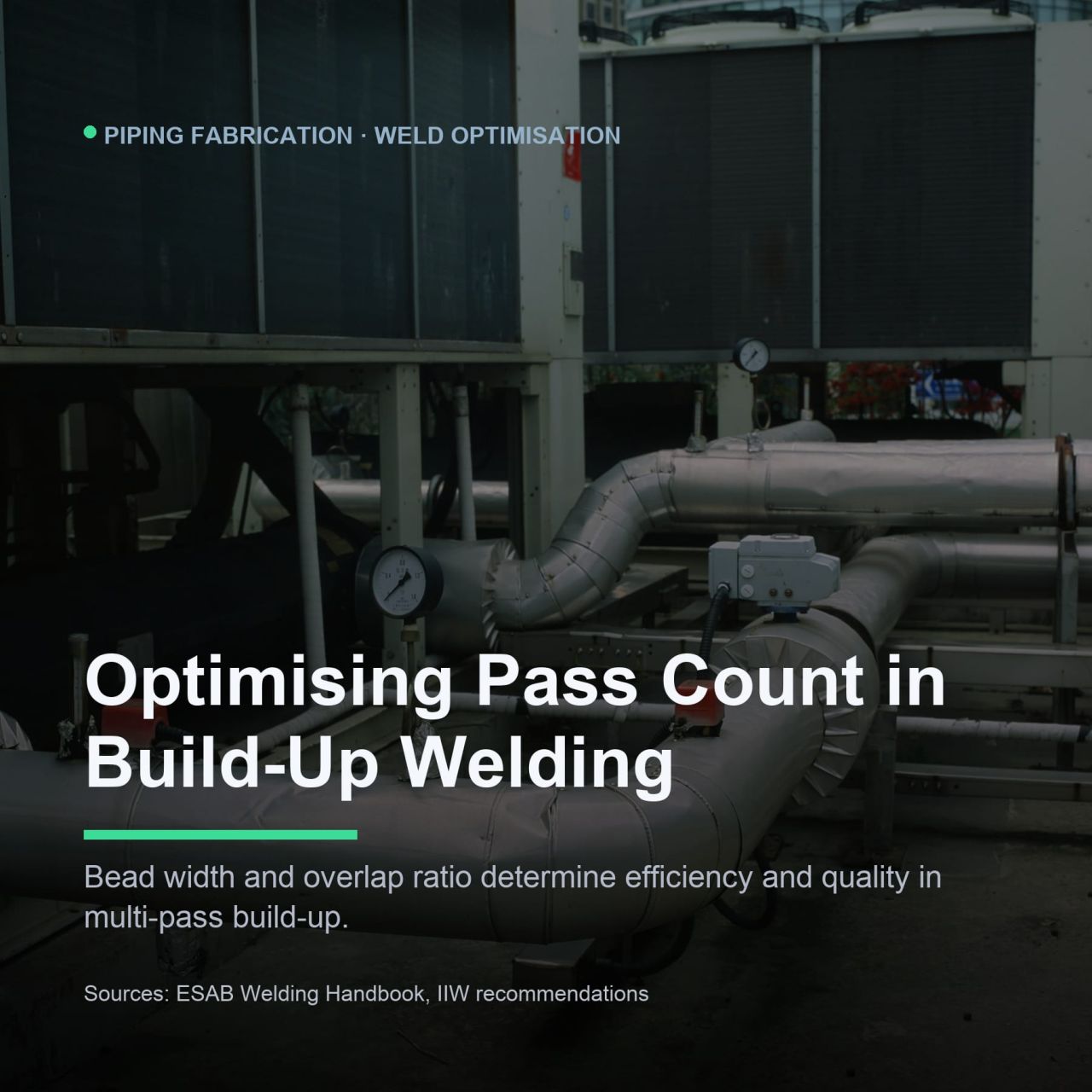
Pass count in build-up welding, bead width and overlap optimisation
Build-up welding is a common repair technique for restoring worn pipe surfaces or building up undersized components. The number of passes directly inf
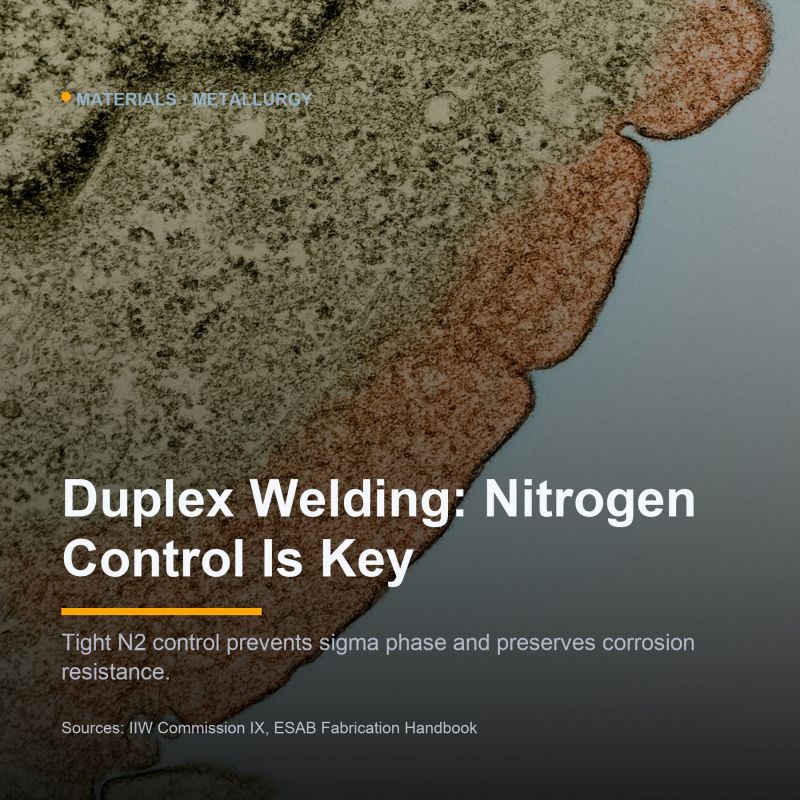
Duplex stainless steels like 2205 and 2507 offer high strength and excellent...
Per IIW Commission IX guidelines and ESAB Fabrication Handbook, nitrogen content in the shielding gas for GTAW should be 1.5-3%, and for GMAW 2-3%. To
Corrosion types in welded joints, galvanic, crevice, and SCC
Welded joints are often the weakest link in corrosion resistance. Three types dominate failures in piping and structural fabrication: galvanic corrosi
Preheat temperature and interpass control in bronze welding
Bronze welding, while less common than steel or stainless fabrication, demands strict thermal discipline. The material's high thermal conductivity and
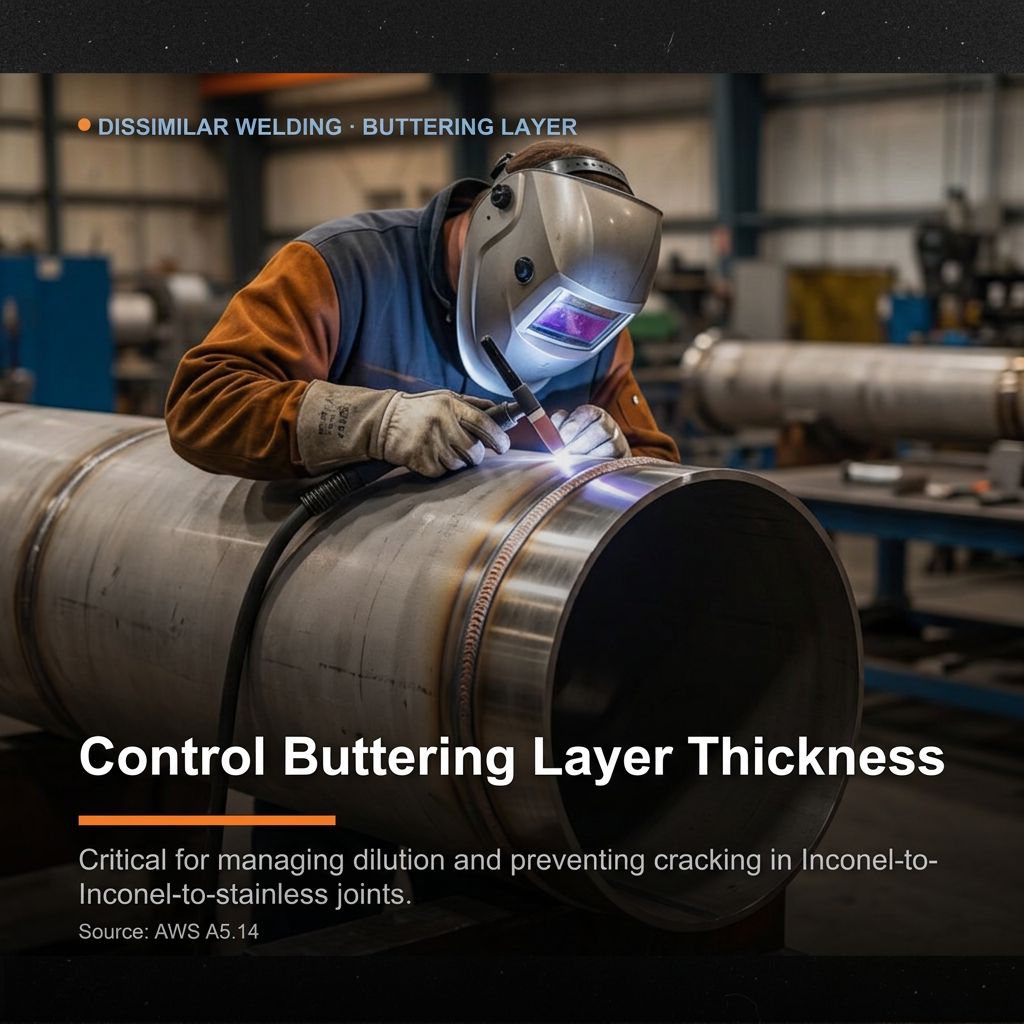
Buttering layer thickness for Inconel to stainless dissimilar welding
Dissimilar welding between Inconel and stainless steel is common in high-temperature and corrosive environments. A key challenge is managing the dilut
Green steel project lessons
Working on one of Europe's largest green steel projects taught me three things about scaling low-carbon metallurgy.
Witnessing mechanical tests during a Procedure Qualification Record (PQR)...
During a typical PQR, the welding engineer or QC representative witnesses the entire process. Key checks include:

Robotic welding is often framed as a threat to the welder's job. But the...
What robotic welding truly eliminates is the paper trail. Every weld parameter, every arc-on time, every deviation is logged automatically. This data
Porosity in aluminium TIG welds often traces back to incorrect AC balance or...
AC balance adjusts the ratio of electrode negative to positive cycles. Too much cleaning action (more EP) can overheat the tungsten and destabilise th
Hardness limits for sour service welding per NACE MR0175
Welding for sour service demands strict hardness control to prevent sulfide stress cracking (SSC). NACE MR0175/ISO 15156 sets maximum hardness limits

Microstructure reads like a story, how to start understanding it
Every weld tells a story, and the microstructure is the chapter where that story is written. For a welding engineer, reading a polished and etched cro
Welding 5083 marine aluminium requires careful control of magnesium content....
NDT plays a key role in verifying weld quality for marine aluminium. Visual inspection checks for surface porosity and discoloration, which can indica

Phased array ultrasonic testing (PAUT) has transformed weld inspection by...
PAUT is particularly effective for detecting planar defects like lack of fusion, cracks, and incomplete penetration. The sectorial scan (S-scan) displ

Electrode wear in aluminium spot welding - quality monitoring
Electrode wear is often overlooked in aluminium resistance spot welding, yet it directly affects weld quality and process stability. As the electrode
Post-weld heat treatment (PWHT) is often misunderstood as a source of...
Common defects arise from poor PWHT practice. Too rapid heating or cooling can reintroduce thermal stresses. Exceeding the upper transformation temper
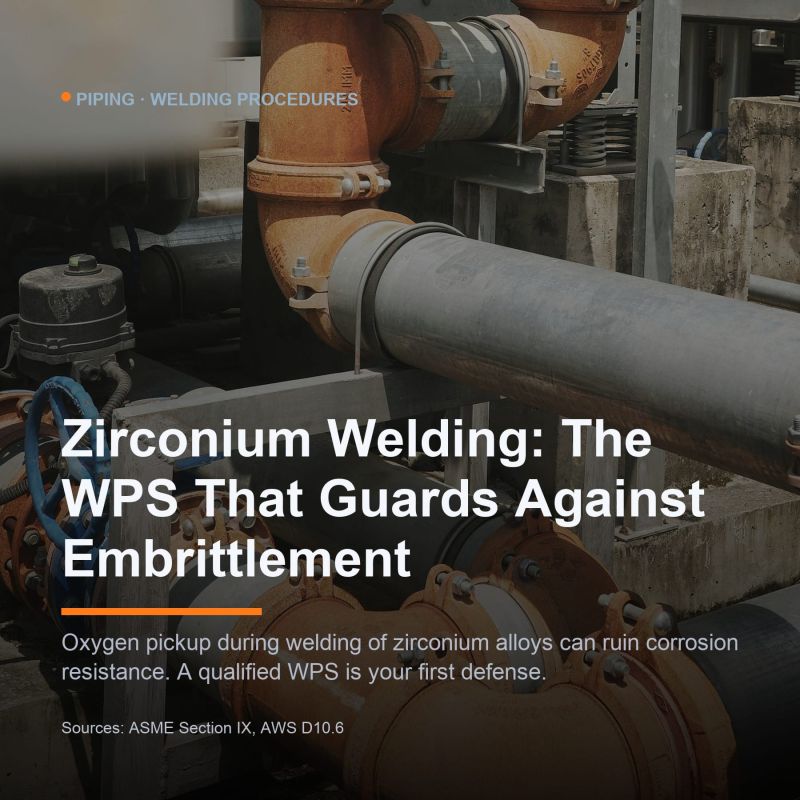
Zirconium welding WPS for nuclear and chemical piping
Zirconium alloys are the go-to material for handling highly corrosive media in nuclear fuel reprocessing and chemical processing plants. But welding z
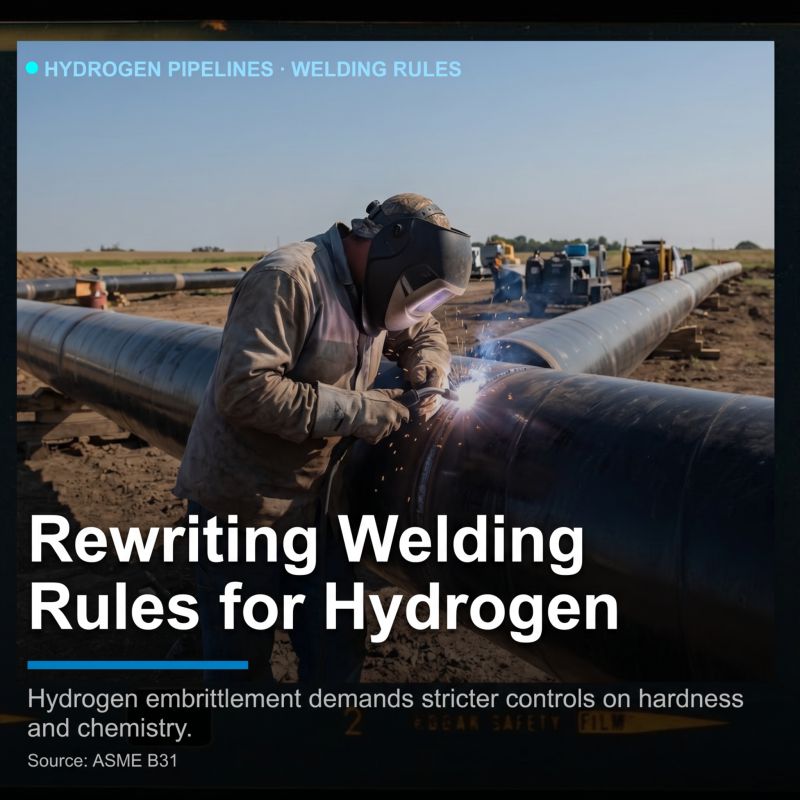
Hydrogen pipelines: rewriting welding rules
Hydrogen embrittlement is forcing a fundamental rethink of welding procedures for hydrogen pipelines. The industry has long relied on established rule
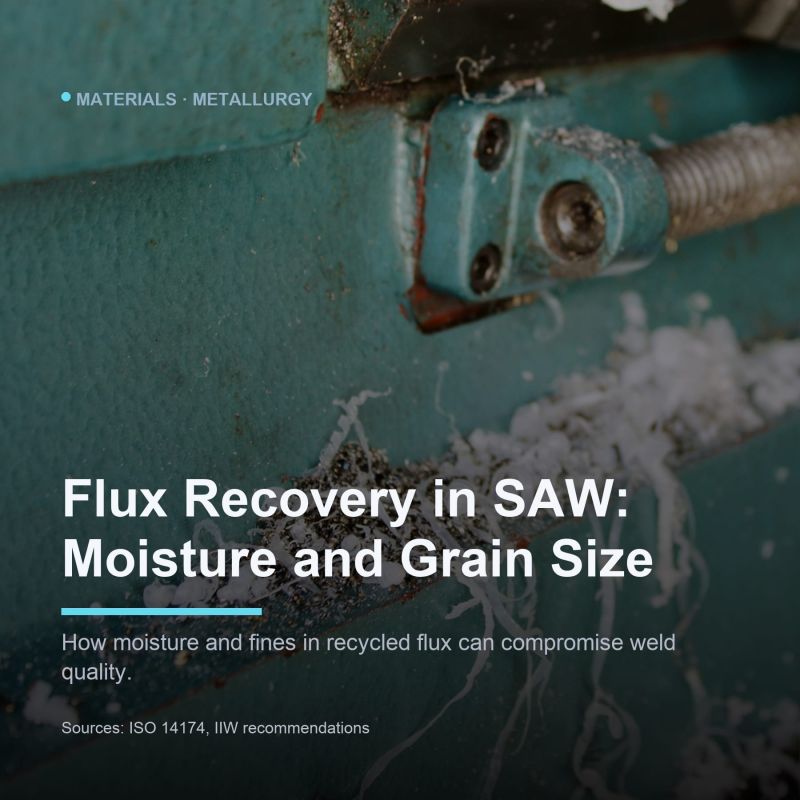
Submerged arc welding (SAW) relies heavily on the flux to protect the weld...
Submerged arc welding (SAW) relies heavily on the flux to protect the weld pool and control the chemical composition of the deposit. One often overloo
Atmospheric protection in Titanium Gr2 welding, backing gas and trailing shield
Welding titanium Grade 2 for piping systems demands rigorous atmospheric protection to prevent contamination. Oxygen, nitrogen, and hydrogen pickup ab

Segregation in Inconel 625 welding, Laves phase formation
Inconel 625 is widely used in corrosive and high-temperature environments, but welding it introduces a metallurgical challenge: Laves phase formation.
Delta ferrite control in 316L welding, Schaeffler and WRC-1992 diagrams
316L stainless steel is selected for its corrosion resistance, but weld metal solidification cracking remains a risk when delta ferrite content is too
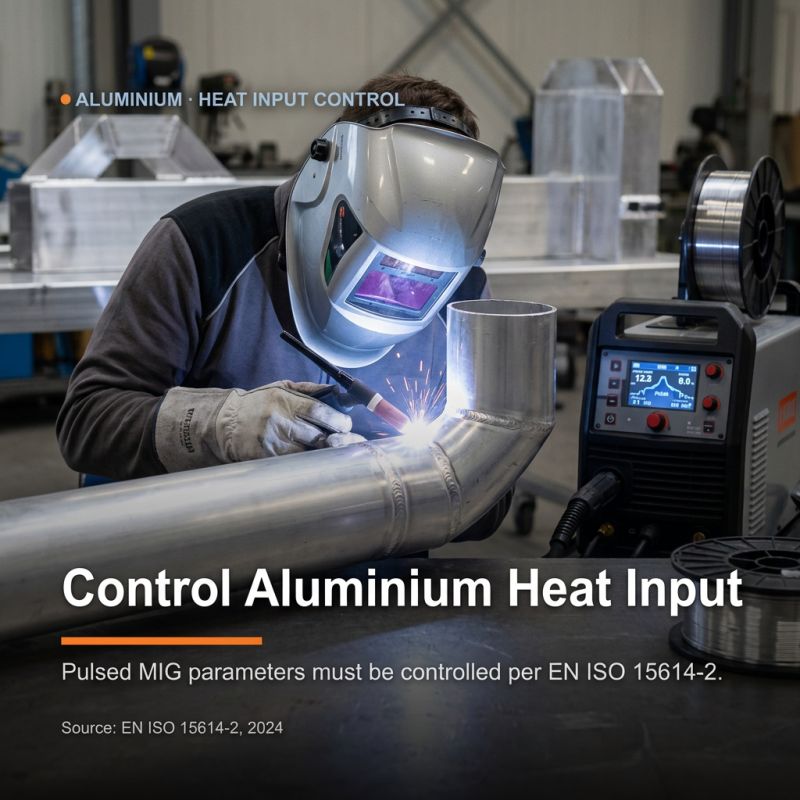
According to EN ISO 15614-2 (2024), the qualification of welding procedures...
A common issue in production is excessive heat input leading to distortion or loss of mechanical properties in the HAZ. For aluminium alloys like 5083

Measuring weekly welding KPIs to drive continuous improvement
According to Peter Drucker's management principle, 'What gets measured gets improved.' In welding fabrication, applying this to weekly KPIs can transf
According to ISO 3834, the international standard for quality requirements...
ISO 3834 defines three quality levels: Comprehensive (Part 2), Standard (Part 3), and Elementary (Part 4). The choice depends on the product's safety-

According to a 2025 industry survey by The Fabricator, over 40% of welding...
A common failure mode is starting WPQR too late, after the project has already begun. Another is using a PQR (Procedure Qualification Record) from a p

Inspection as the last line of defense, quality by design in welding fabrication
According to ISO 3834-2:2021, Quality Requirements for Fusion Welding of Metallic Materials, inspection is the final verification step, but quality mu
When ultrasonic testing beats radiography, and when it does not
According to a 2025 TWI technical report on NDT method selection for welded fabrications, ultrasonic testing (UT) and radiography (RT) are the two pri
According to ASME B31.3:2024 and API 1110, pneumatic testing carries...
Stored energy in a pneumatic test is calculated using the formula E = P ? V ? ln(P/P_atm) for ideal gases. For example, a 10 m? vessel at 20 bar store
According to ASME PCC-1:2022, proper bolt torquing sequences and lubrication...
Key requirements from ASME PCC-1 include:
Hydrogen Cracking in High-Strength Steel Welds
According to ISO/TR 17844:2004, cold cracking in high-strength steel welds is primarily driven by three factors: hydrogen content in the weld metal, t
Automated Ultrasonic Testing (AUT) for Girth Weld Defect Sizing
According to ISO 13588:2019, automated ultrasonic testing (AUT) using phased-array technology provides reliable defect detection and sizing in girth w
Cryogenic Piping Material Selection and Welding per EN 13458
According to EN 13458-2:2023, material selection for cryogenic piping systems must account for notch toughness at minimum design temperatures as low a
PWHT of P91 Steel for Creep Service
According to ASTM A335/A335M-22 and ASME Section I, Grade P91 (9Cr-1Mo-V) steel is widely used in high-temperature creep service in power plants and r
Branch Reinforcement and Weld-olet Design per ASME B31.3
According to ASME B31.3-2022, branch connections in process piping must be properly reinforced to withstand internal pressure and external loads witho
Phased-Array UT (PAUT), Planar vs Volumetric Defect Detection
According to ASME Section V Article 4 (2019) and ISO 13588:2019, phased-array ultrasonic testing (PAUT) has become a primary tool for detecting and si
Preheating and Interpass Temperature Control for Welding
According to EN ISO 13916:2017, preheating and interpass temperature control are essential to prevent hydrogen-induced cracking and ensure consistent

Root Gap and Hi-Lo Alignment in Piping Spool Fit-Up
According to ASME B31.3, Process Piping, root gap and hi-lo (internal misalignment) are critical parameters during tack welding and fit-up of piping s
According to the International Marine Contractors Association (IMCA),...
In marine environments, welded joints are particularly vulnerable due to residual stresses, microstructural changes in the heat-affected zone (HAZ), a
According to EN ISO 15012-1:2020, welding fume control is a critical...
Key requirements include minimum capture velocity at the welding arc, filter leakage limits, and system monitoring protocols. The standard also addres
According to EN 10028-2:2017, creep-resistant steels such as 13CrMo4-5 and...
A common failure mode is inadequate tempering during PWHT, which leaves a hard, untempered martensite in the heat-affected zone (HAZ). This microstruc
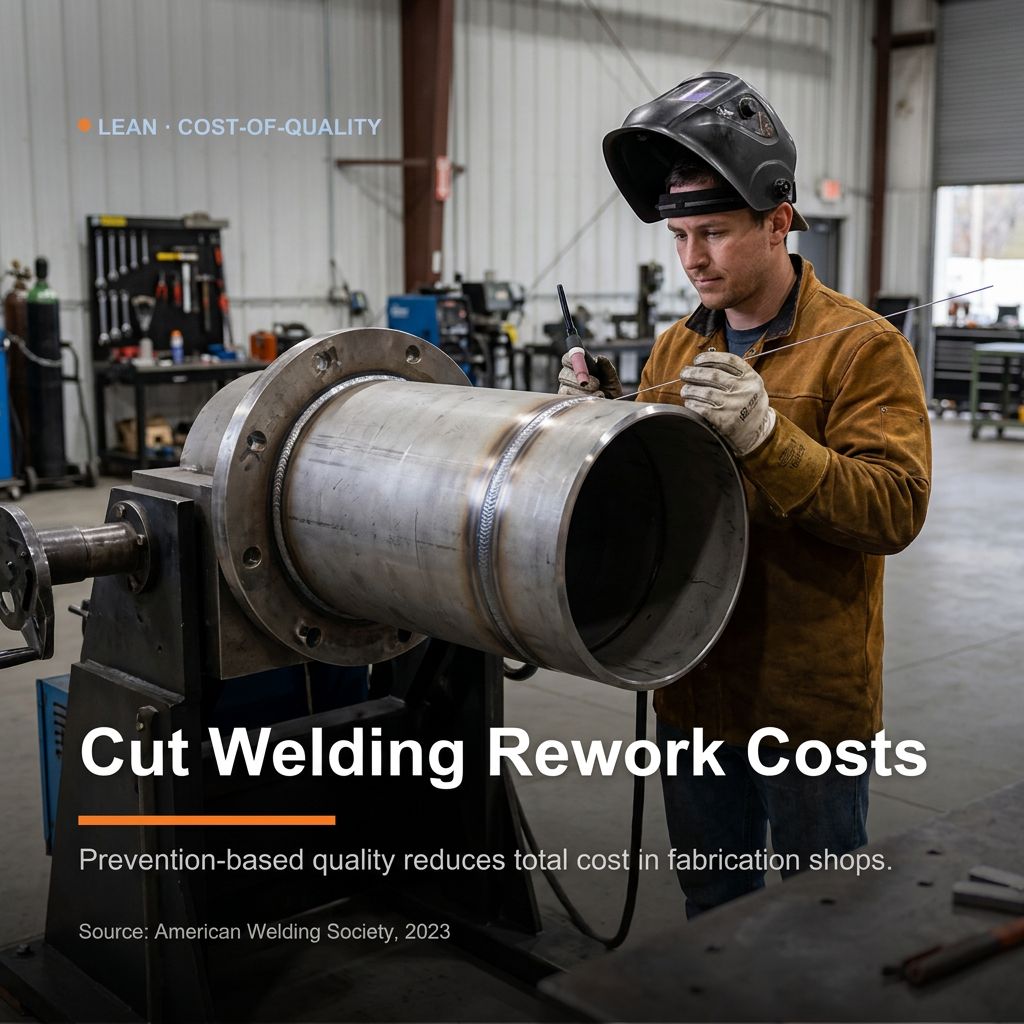
Lean Cost of Quality in Welding Fabrication
According to the American Welding Society (AWS), the cost of quality in welding fabrication typically ranges from 5% to 15% of total project cost, wit
SWPS by Adoption, 5 Critical Rules
According to EN ISO 15612:2018, a Standard Welding Procedure Specification (SWPS) allows a manufacturer to adopt a welding procedure qualified and pub
According to EN 1090-2:2018, the execution of steel structures requires...
The standard classifies execution classes (EXC1 to EXC4) based on the consequence of failure. For example, EXC3 applies to structures in seismic zones
SWPS in EN ISO 15607: what it is and how it differs from pWPS and WPAR
According to EN ISO 15607:2019, a Standard Welding Procedure Specification (SWPS) is a prequalified WPS that can be used without performing a full WPQ

SWPS under EN ISO 15612: Standard Welding Procedure Specification
According to EN ISO 15612:2018, a Standard Welding Procedure Specification (SWPS) can be adopted from a recognized published standard without conducti
Dissimilar Metal Welding (DMW) of Stainless Steel to Carbon Steel
According to a 2025 technical guide by TWI, dissimilar metal welding (DMW) between stainless steel and carbon steel is common in piping systems but in
Interpass Temperature Control in Welding
According to ISO 13916:2017, interpass temperature is a critical parameter in welding that directly influences the heat-affected zone (HAZ) microstruc

Lean Manufacturing in Welding Fabrication Shops
According to a 2025 report by The Fabricator, lean manufacturing principles are transforming welding fabrication shops by eliminating waste and improv
Friction Stir Welding of Aluminum for Lightweight Structures
According to a 2026 review in ScienceDirect, friction stir welding (FSW) is increasingly adopted for joining aluminum alloys in lightweight structural
Corrosion Under Insulation in Piping Systems
According to a 2026 technical paper by NACE International, corrosion under insulation (CUI) remains a leading cause of piping failures in the process
Flange Bolt Torquing Sequences per ASME PCC-1
According to ASME PCC-1-2022, Guidelines for Pressure Boundary Bolted Flange Joint Assembly, the correct bolt torquing sequence is critical to achievi
Dissimilar Metal Welding of Carbon Steel to Stainless Steel
According to a 2025 technical guide from TWI, welding carbon steel to austenitic stainless steel introduces a critical challenge: carbon migration. At
A new study published in Welding in the World (Miedlig et al., 2026)...
**Why the delay matters for QC.**
According to ISO 3834, the quality of welded fabrication is not just about...
For fabricators aiming to certify to ISO 3834-2, the key elements include:
The European railway welding standard EN 15085 is not a standalone document....
**Part 1 — General (scope and definitions).
Every fabrication project has a weld map. Few meet the traceability...
*Standard requirement 1 — Joint numbering per ISO 3834-2 (Quality Requirements for Welding).*

According to ISO 13916 and AWS D1.1, interpass temperature is a critical...
A common oversight in production welding is the failure to monitor interpass temperature consistently, especially during multi-pass welds. Shops often
According to a 2025 review in Welding in the World, heat-affected zone (HAZ)...
Key findings include:

According to ISO 15614-1:2017, the location and orientation of weld metal...
For butt welds, tensile specimens must be taken transverse to the weld axis, with the weld reinforcement removed flush. Impact specimens, when require
Fitting weld preparation and root gap tolerance:
Practical bevel, fit-up and tacking practice
According to the Welding Institute (TWI) and ASME Section IX, buttering and...
Key considerations for welding coordinators:
According to the latest revision of ISO 17635:2024, the way we group welding...
For a welding coordinator on a green-steel mega-project, this means one clear reference to navigate the entire quality system. Instead of cross-refere

AIAG CQI-15 is not a weld quality test. It is a data retrieval test...
Here is what automotive OEM auditors actually check during a CQI-15 assessment:
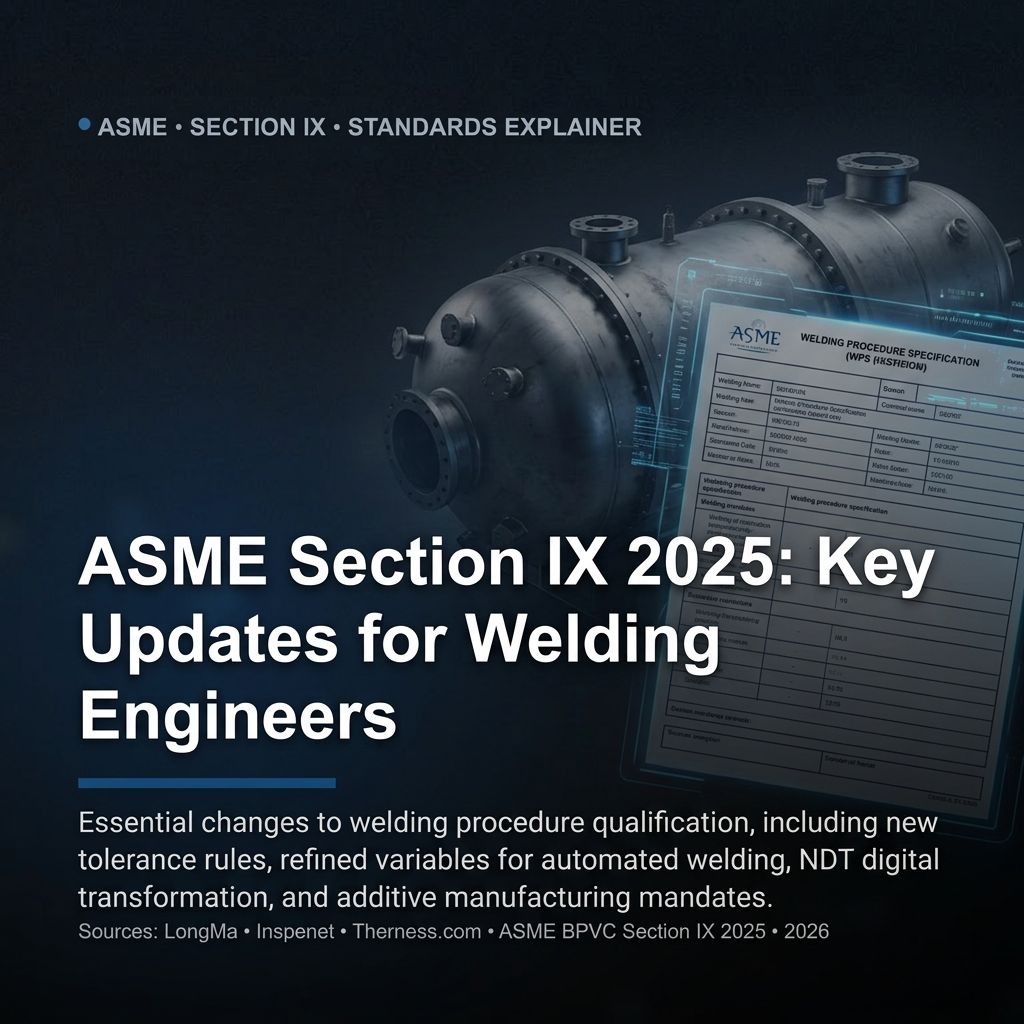
ASME Section IX governs welding procedure qualification for pressure vessels...
Here are the key updates every welding engineer and quality manager should know.
The best NDT method for critical welds is not PAUT or TOFD. It is both, used...
According to a comprehensive 2026 guide from Therness on PAUT weld inspection, the combination of Phased Array Ultrasonic Testing (PAUT) and Time-of-F

Drones are no longer just for aerial photography. They are now carrying...
On May 20, DRONE VOLT and SKIPPER NDT signed a collaboration agreement to combine drones, geospatial intelligence, and advanced electromagnetic detect
Hydrostatic Test Planning and Acceptance Criteria per EN 13480-5
According to EN 13480-5:2017, the hydrostatic test is the final integrity check for a piping system before commissioning. The standard requires that t
In-Service Welding (Hot Tap) on Pressurized Piping per API 1104
According to API 1104, 22nd Edition (2020), and its amendment for in-service welding, hot tap welding on pressurized pipelines demands rigorous contro
Sensitization of Austenitic Stainless Steels in Welding
According to a 2025 technical review in Welding in the World, sensitization remains a critical metallurgical risk when welding austenitic stainless st
Heat-Affected Zone Softening in DP Steels
According to a 2025 review in Welding in the World, heat-affected zone (HAZ) softening remains a critical challenge when welding advanced high-strengt
PWHT of P91 Steel for Creep Strength
According to a 2026 review in Welding in the World, post-weld heat treatment (PWHT) of Grade 91 (P91) steel is critical for achieving the required cre
PAUT (Phased Array Ultrasonic Testing) for Weld Inspection
According to a 2025 technical bulletin from the American Welding Society (AWS), Phased Array Ultrasonic Testing (PAUT) has become the preferred method
Weld Metal Hydrogen Control in High-Strength Steels
According to a 2025 review in Welding in the World, hydrogen-assisted cracking remains a primary concern for high-strength steel welds, particularly i
Test Safety and Stored Energy in Piping Systems
According to ASME B31.3 Process Piping Code, hydrostatic testing is the final integrity verification for pressure piping systems. The test pressure is
Friction Stir Welding of Aluminum
According to a 2025 review in Science and Technology of Welding and Joining, friction stir welding (FSW) has become a mature solid-state joining proce

Every welding procedure specifies a minimum preheat temperature. But preheat...
Every welding procedure specifies a minimum preheat temperature. But preheat has two functions that most field inspectors see violated weekly:
According to ISO 9606-1, welder qualification is valid for two years,...
According to ISO 9606-1, welder qualification is valid for two years, provided the welder works continuously within the approved range and no adverse
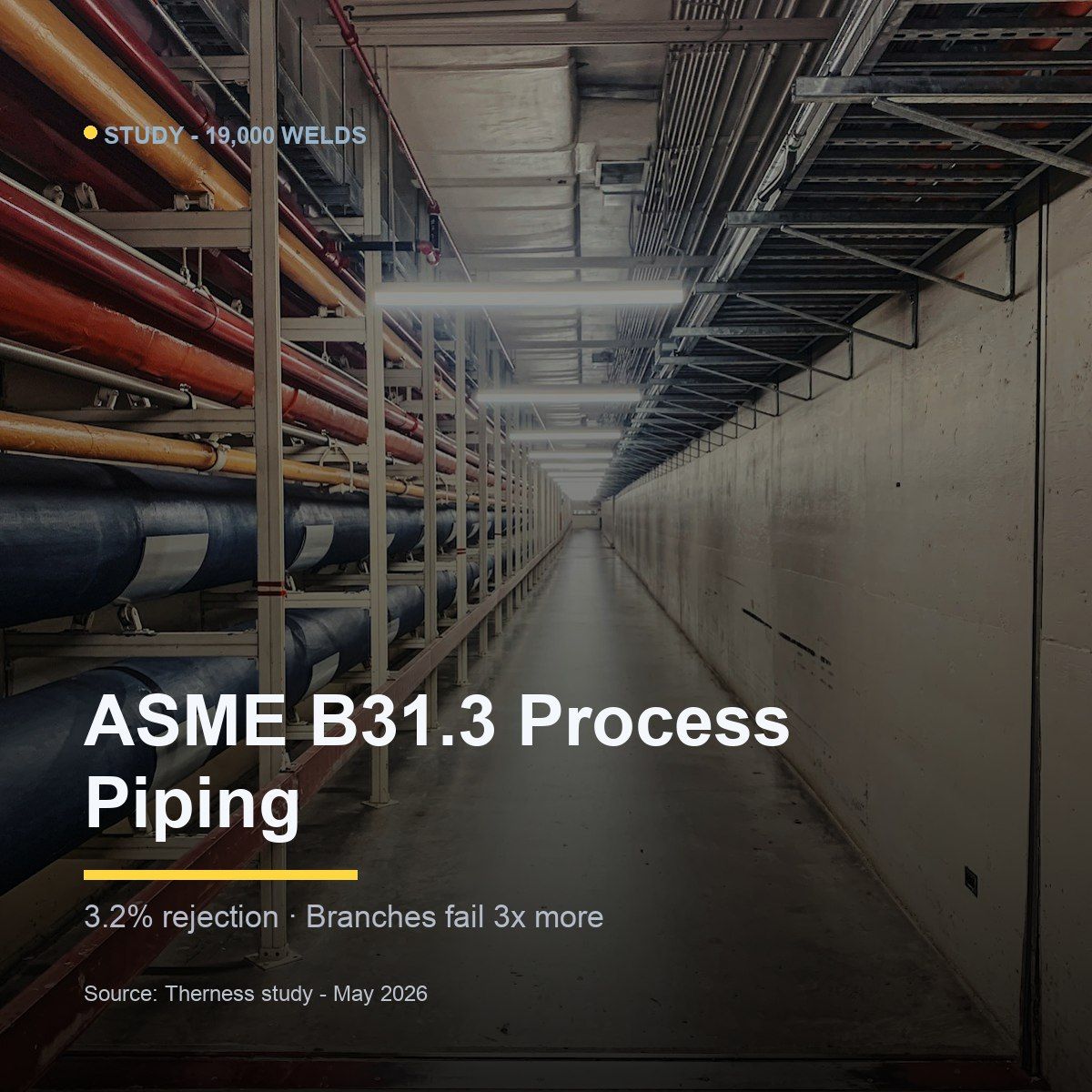
ASME B31.3 Process Piping - 19,000-Weld Rejection Study
A May 2026 analysis by Therness (process piping fabricator) tracked 19,000+ production welds across six months of ASME B31.3 shop fabrication. The num
According to EN 13480-4 (2024 Edition), post-weld heat treatment (PWHT) of...
According to EN 13480-4 (2024 Edition), post-weld heat treatment (PWHT) of piping spools is mandatory for certain material thicknesses and service con
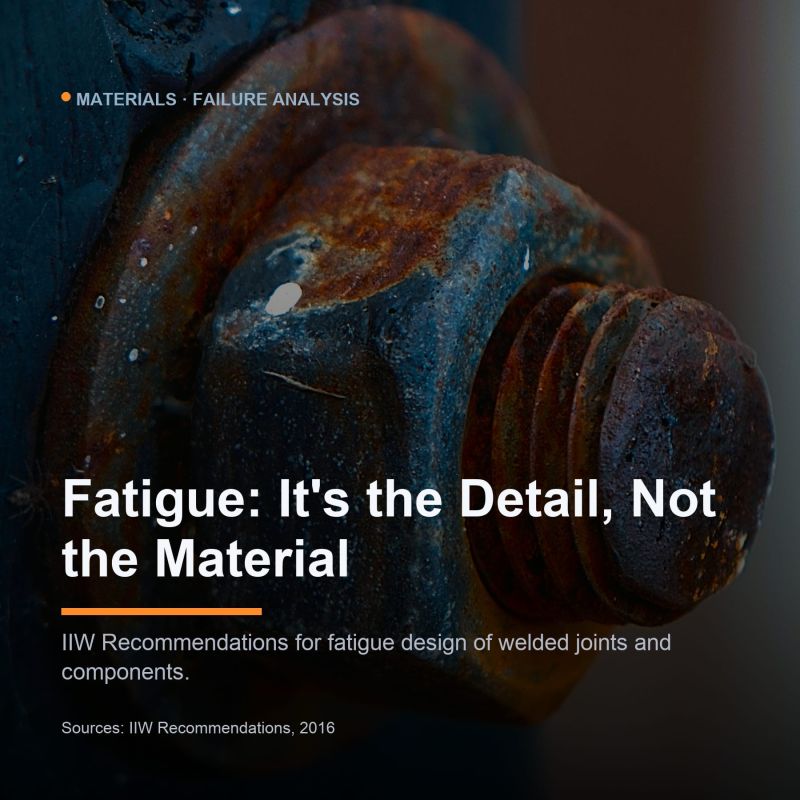
According to the IIW Recommendations for Fatigue Design of Welded Joints and...
According to the IIW Recommendations for Fatigue Design of Welded Joints and Components (2nd Edition, 2016), fatigue is the leading cause of failure i

Welder training simulator ROI
According to a 2026 survey by the American Welding Society, 62% of fabrication shops using virtual reality welder training simulators report a 30% fas
EN 10225 Weldability Testing for Offshore Steel
According to the latest revision of EN 10225 (2024), weldability testing for offshore structural steels now mandates stricter through-thickness proper

According to a recent Varex Imaging analysis, the NDT industry is undergoing...
According to a recent Varex Imaging analysis, the NDT industry is undergoing its most significant transformation in decades. The convergence of digiti
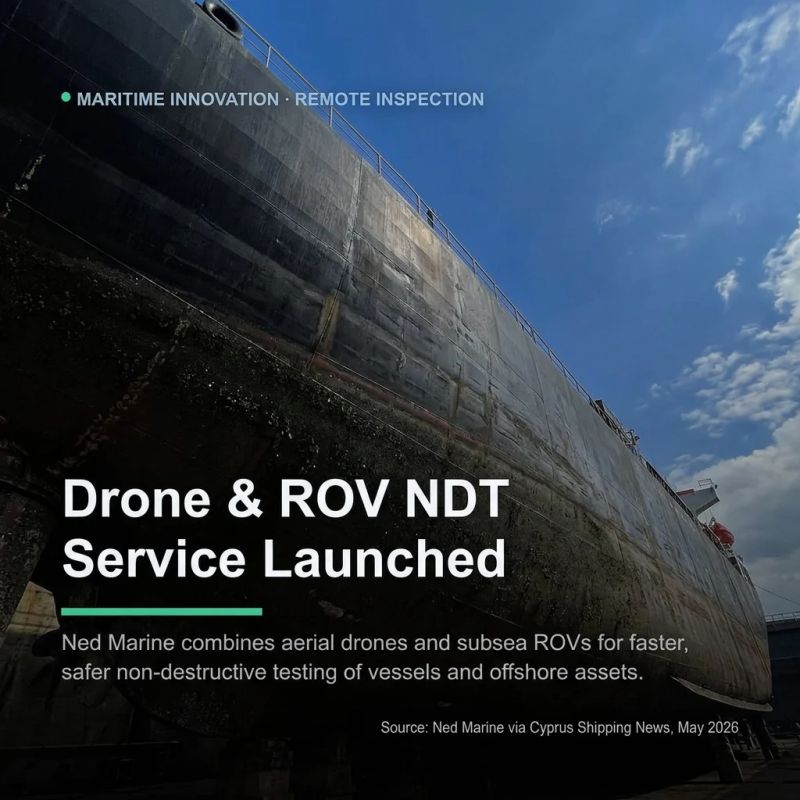
According to Cyprus Shipping News, Dutch NDT specialists Ned Marine have...
According to Cyprus Shipping News, Dutch NDT specialists Ned Marine have launched a new service combining flying drones and subsea ROVs for non-destru
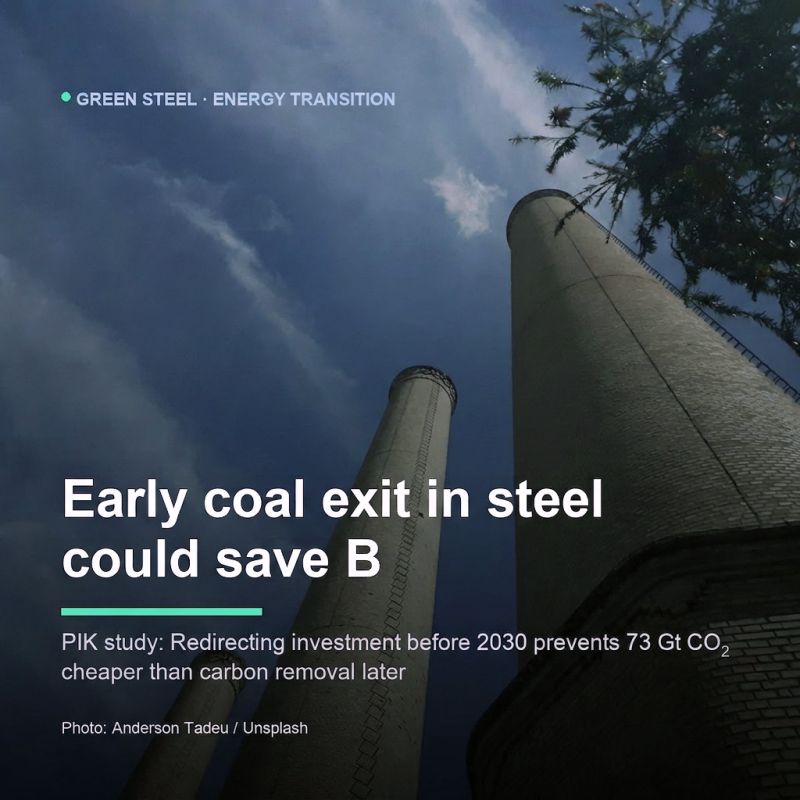
According to a study published in Nature Climate Change by the Potsdam...
According to a study published in Nature Climate Change by the Potsdam Institute for Climate Impact Research (PIK), investing now to shift steel produ
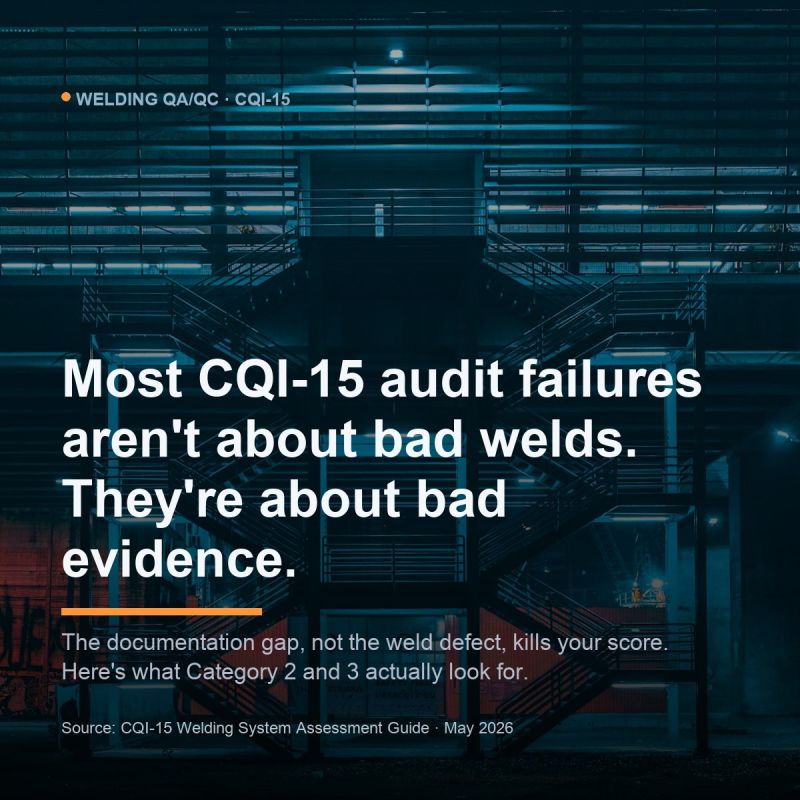
According to the AIAG CQI-15 Welding System Assessment guide (released May...
According to the AIAG CQI-15 Welding System Assessment guide (released May 18, 2026), the audit evaluates whether your welding management system is ac