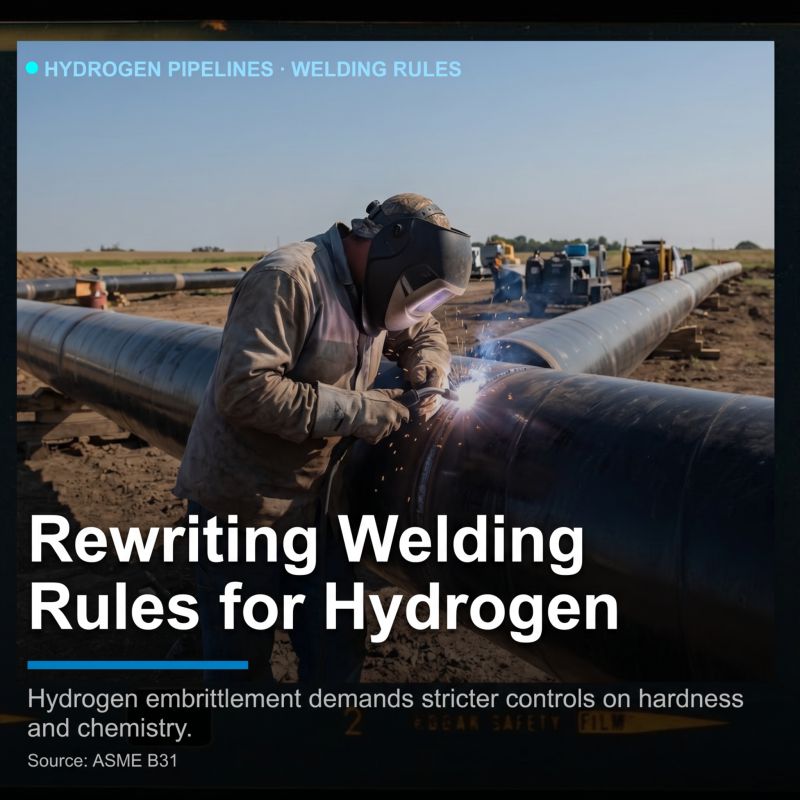
Hydrogen embrittlement is forcing a fundamental rethink of welding procedures for hydrogen pipelines. The industry has long relied on established rules for carbon steel girth welds, but hydrogen service demands far stricter controls on hardness, residual stress, and weld metal chemistry.
Recent research shows that the maximum allowable hardness in the HAZ for hydrogen pipelines may need to drop below 250 HV, compared to the 350 HV often accepted for oil and gas. This shifts preheat and interpass temperature requirements significantly. Weld metal composition also becomes critical: nickel content above 1% can reduce hydrogen diffusivity and lower cracking risk, yet many standard ER70S-6 and E7018 electrodes do not meet this requirement.
Key changes being adopted include:
• Limiting weld metal tensile strength to 760 MPa to avoid high constraint.
• Requiring PWHT for wall thicknesses above 20 mm, even for API 5L X52 grades.
• Specifying low-hydrogen practices with a maximum diffusible hydrogen of 5 ml/100g.
• Using modified Gleeble tests to qualify HAZ toughness at hydrogen pressures up to 100 bar.
These rules are being codified into new annexes of ASME B31.12 and ISO 19880. The era of treating a hydrogen pipeline weld like a standard oil and gas girth weld is ending.
Source: ASME B31
How is your organization adapting welding procedures for hydrogen service?