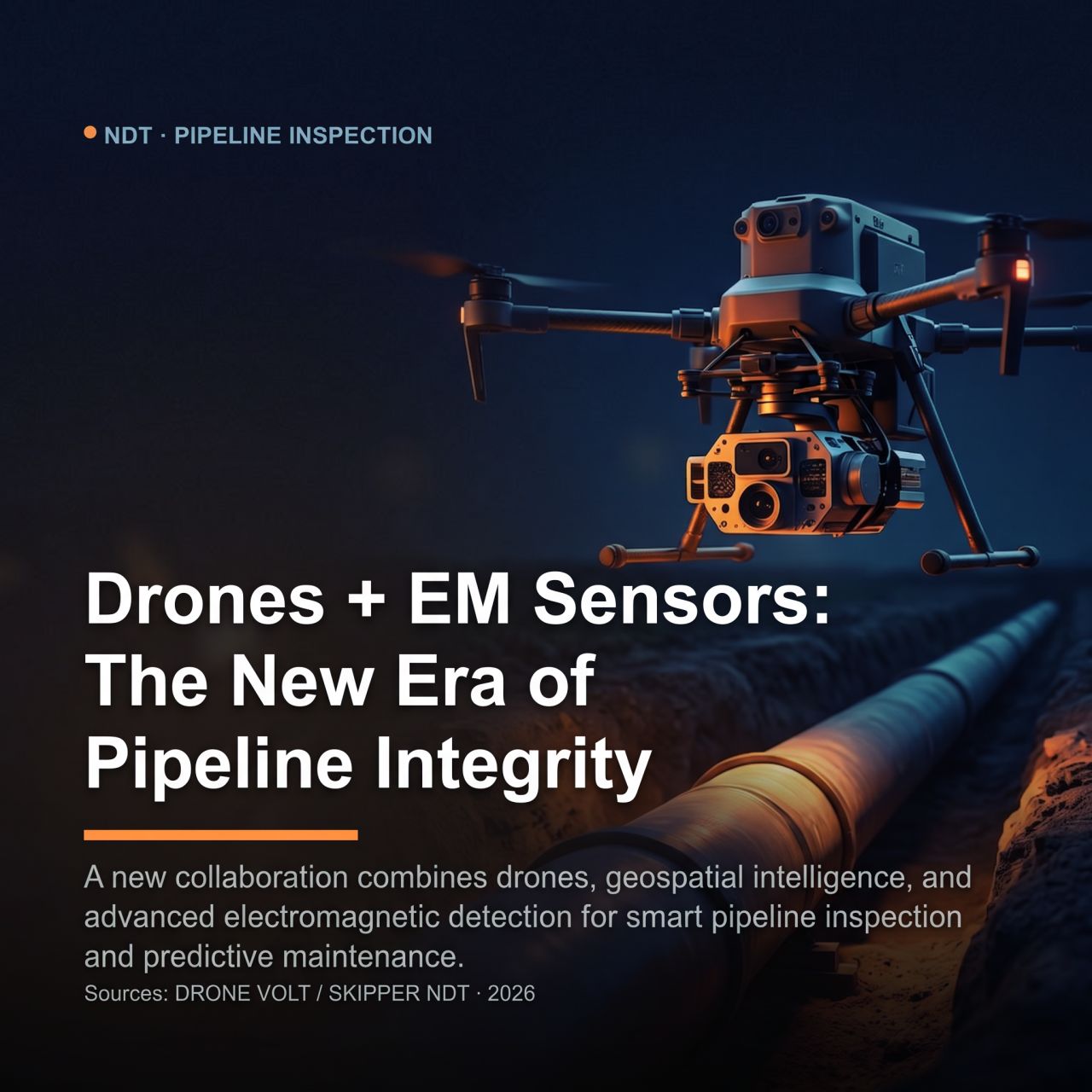
On May 20, DRONE VOLT and SKIPPER NDT signed a collaboration agreement to combine drones, geospatial intelligence, and advanced electromagnetic detection for smart pipeline inspection. The technology targets buried infrastructure mapping, detection of ground movement around pipelines, and predictive maintenance optimization for critical energy assets.
As a piping and welding QC engineer, I see this as a natural evolution. The weakest link in pipeline integrity is often not the weld procedure itself, but the gap between construction-stage NDT and long-term in-service monitoring. Robotic platforms that can revisit the same joint year after year with repeatable positioning and calibrated sensors close that gap.
Automatic UT crawlers for above-ground refinery piping are already standard. Extending the same logic underground, with drones handling positioning and electromagnetic sensors doing the detection, changes the game for operators managing thousands of kilometers of pipeline. The shift is from periodic spot checks to continuous corridor-level surveillance.
Source: DRONE VOLT / SKIPPER NDT press release, May 20, 2026
What has your experience been with drone-based NDT? How does the data quality compare to manual UT or RT on your sites?