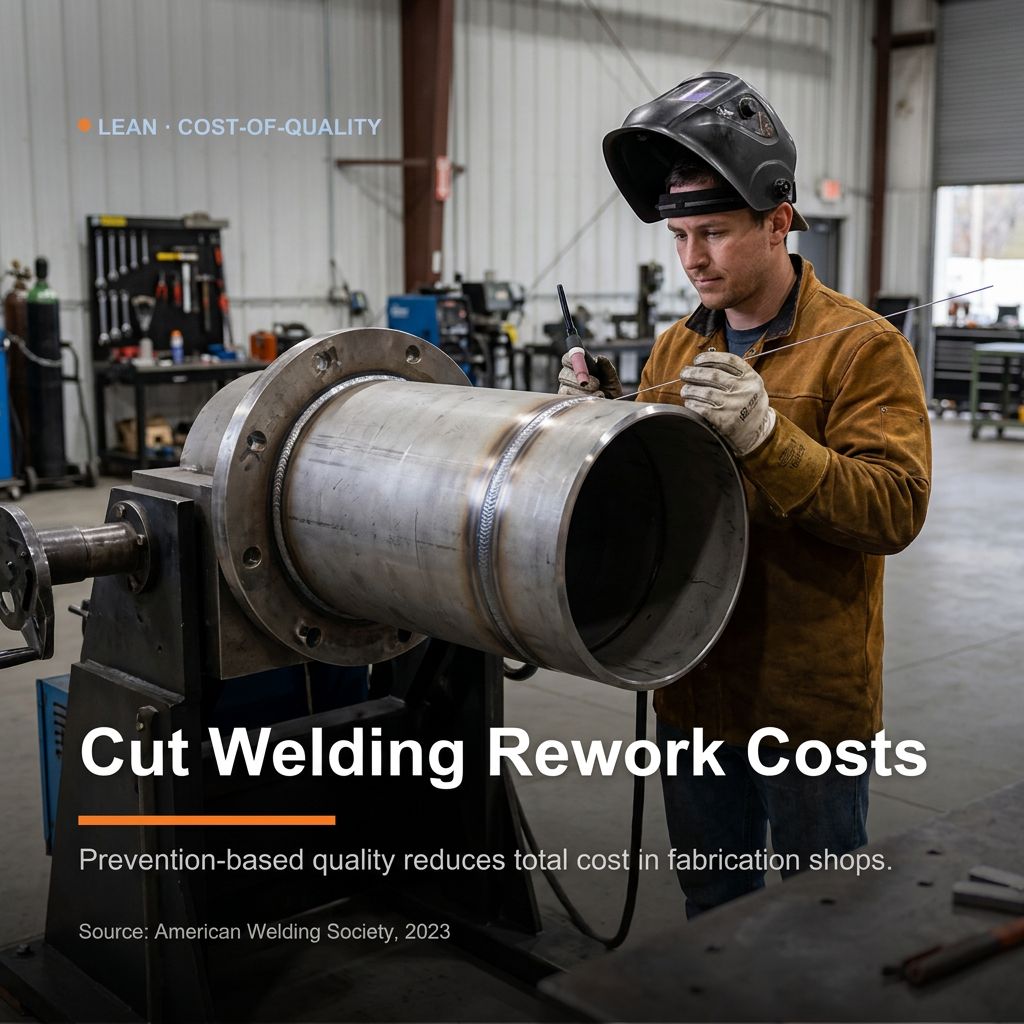
According to the American Welding Society (AWS), the cost of quality in welding fabrication typically ranges from 5% to 15% of total project cost, with rework and repair representing the largest share.
Many shops still track quality costs reactively, only after defects are found. A proactive approach involves categorizing costs into prevention, appraisal, and failure. Prevention includes welder training and procedure qualification. Appraisal covers NDT and inspection. Failure costs are scrap, rework, and delays.
A common observation is that investing in prevention reduces overall cost of quality. For example, pre-weld checks and proper joint preparation can cut repair rates by half. Auditors often look for a documented cost-of-quality system as evidence of lean management.
Shifting from a detection-based to a prevention-based quality culture not only reduces costs but also improves delivery reliability and customer satisfaction.
How does your organization track and reduce the cost of quality in welding?
Source: American Welding Society, 2023