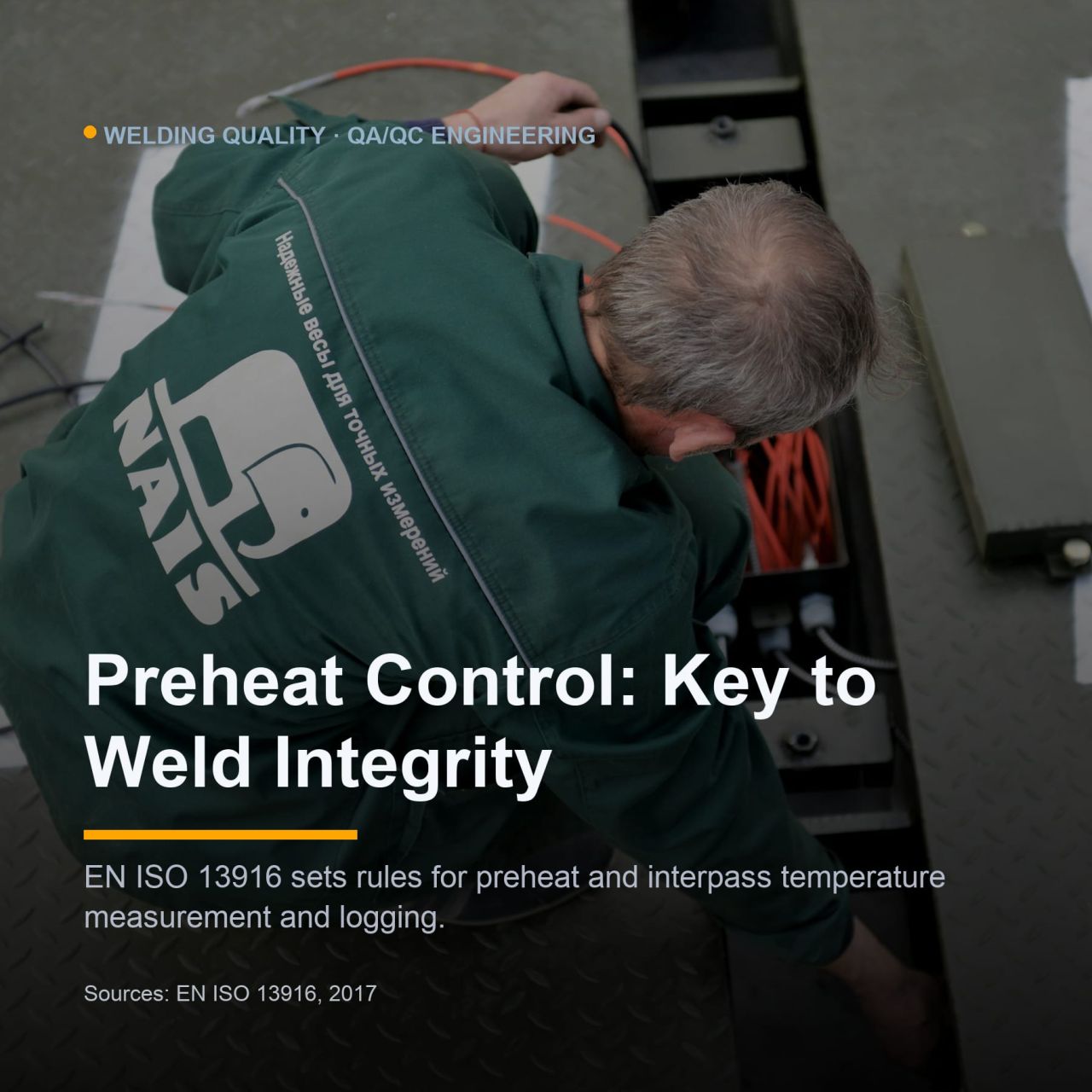
According to EN ISO 13916:2017, preheating and interpass temperature control are essential to prevent hydrogen-induced cracking and ensure consistent weld mechanical properties. The standard requires that the preheat temperature be maintained throughout welding, with interpass temperature not falling below the specified minimum. For low-alloy steels, typical preheat levels range from 100°C to 200°C, depending on carbon equivalent and section thickness. Many fabricators rely on temperature-indicating crayons or contact thermometers, but infrared pyrometers and data-logging systems offer better traceability.
Auditors often check that preheat records include the time of measurement, location relative to the weld, and ambient conditions. A common nonconformance is measuring preheat on the weld face instead of 75 mm from the joint. Per the standard, the measurement point should be on the base metal, within 75 mm of the weld preparation, on the side opposite the heat source.
To improve quality, consider these practices:
• Use calibrated temperature-measurement tools and log readings at regular intervals.
• Define acceptance criteria in the WPS for both preheat and interpass temperatures.
• Train welders and inspectors on correct measurement locations and timing.
Accurate control of preheat and interpass temperature reduces repair rates and extends weld service life. How does your team verify interpass temperature during long welding runs?
Source: EN ISO 13916:2017